Quick Summary
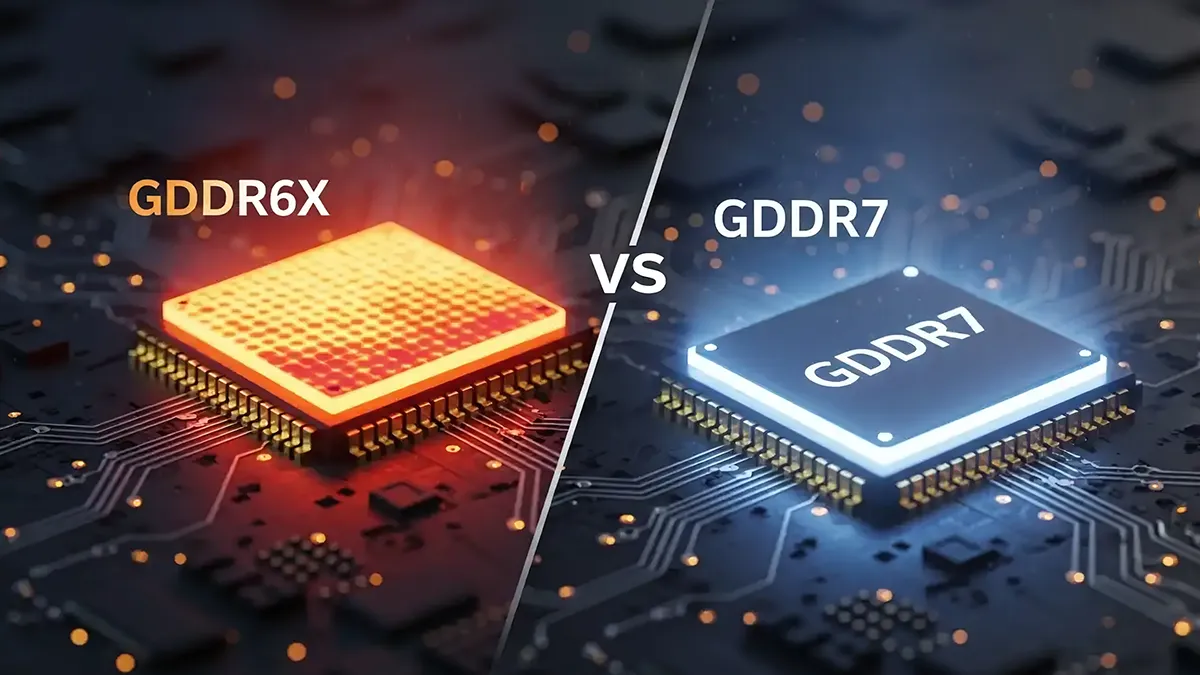
As we move into 2026, the transition from GDDR6X to GDDR7 represents a significant leap in memory bandwidth. However, this performance increase comes with a corresponding rise in laptop VRAM heat density. This demands a new approach to thermal management, as discussed in AI Workloads vs Gaming Thermals.
Current cooling strategies struggle to keep up with the escalating thermal challenges of high-speed memory. Owners of current high-end hardware already face a challenge with GDDR6X thermals on their RTX laptop VRAM. These modules often reach temperatures 20-30°C higher than the GPU core.
The upcoming GDDR7 standard thermals will bring even higher absolute peak limits, expected to reach 115-120°C. While GDDR7 can handle these higher peaks, maintaining a stable sustained operating temperature GDDR7 will be crucial for long-term reliability. For insights into managing current high-speed memory, see AI Workloads: Mastering VRAM Thermals for Stability.

Know your VRAM Thermal Limits
Download the 2026 Reference Chart for RTX 30/40/50 Series.
Standard cooling assemblies are often designed for average loads, not the peak power states of modern AI workloads VRAM. Especially for intensive tasks, reactive cooling solutions simply won't suffice, as heat accumulates faster than shared heat pipes can dissipate it.
The VRAM Shield Solution
Future-Proofing Performance
To prepare for this next generation of hardware and ensure consistent performance, VRAM Shield offers an essential solution for precise VRAM temperature control through process scheduling VRAM.
VRAM Shield achieves this through its proprietary Pulse Throttling technology. By modulating the duty cycle of GPU-intensive tasks, it introduces micro-pauses that allow memory modules to dissipate heat faster than it accumulates.
Don't let unmanaged heat compromise your system's stability or performance, now or in the future. Take direct control over your hardware's thermal performance and ensure consistent output during demanding tasks. Explore the professional-grade monitoring and management tools in VRAM Shield by choosing your plan today.